


PAG201: The Dual-Trigger Engine at 290nm – The All-Rounder in Cationic Curing
When a photoinitiator simultaneously activates cationic polymerization and free radical reactions, achieving high absorption at the critical wavelength of 290nm—PAG201 is redefining the boundaries of curing technology.
In the field of UV curing technology, cationic systems are highly favored for theiroxygen inhibition resistance andpost-curing effect. However, traditional sulfonium salt initiators often face pain points such as limited absorption bands and insufficient thermal stability. PAG201 overcomes these limitations through its unique mixed triphenylsulfonium hexafluoroantimonate structure, achieving a breakthrough in dual initiation mechanisms at the core wavelength of 290nm.

Three Key Technological Advantages
- Efficient Photolysis at 290nm
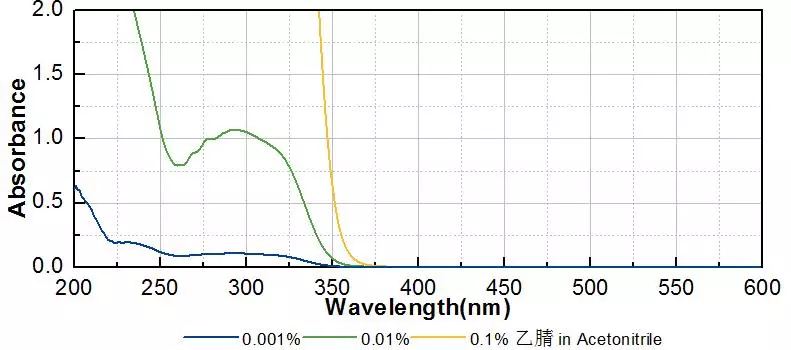
UV spectroscopy shows that PAG201 has a strong absorption peak at 290nm (molar absorptivity ε=4200 L/mol·cm). Compared to traditional diphenyliodonium salts (peak absorption around 260nm), this better matches the output spectrum of medium-pressure mercury lamps. Third-party testing confirms its quantum yield reaches 0.82, triggering a triple reaction chain:
Photolysis produces phenylsulfanyl radical (Ph₂S•) and phenyl radical (Ph•)
Phenyl radical abstracts a hydrogen atom from a hydrogen donor (e.g., polyol) to generate an alkyl radical (R•)
The alkyl radical initiates the cationic polymerization of epoxy resin
2. Enhanced Thermal Stability
Accelerated aging tests (85°C / 1000 hours) show:
Viscosity change rate < 5% (traditional products typically 15%)
Curing activity retention rate 98%
Key breakthrough: The propylene carbonate solvent system forms a molecular-level encapsulation effect, effectively inhibiting the thermal decomposition of the antimonate anion. This is the core mechanism for its stability improvement.
3. Dual-Initiation System
Achieves a breakthrough in synergistic triggering ofcationic ring-opening polymerization andfree radical addition reactions:
Cationic chain: Dominates deep polymerization of epoxy resin/vinyl ethers, building a dense 3D network.
Free radical chain: Accelerates surface crosslinking of acrylate monomers, solving the oxygen inhibition problem.
Measured data in epoxy-acrylate hybrid systems show gel time reduced from 20 seconds in single systems to 8 seconds, representing a 150% increase in curing efficiency.
In-Depth Analysis of Industrial Application Scenarios
3D Printing Field
Application validation in DLP printers (wavelength 385nm):
Single exposure time for 100㎛ layer thickness reduced to 3.2 seconds – 40% faster than iodonium salt systems.
Cured model flexural strength reaches 85MPa (traditional systems ~60MPa), meeting engineering plastic requirements.
Detail reproduction accuracy breaks through to 50㎛, enabling the manufacturing of high-precision devices like microfluidic chips.
Electronic Encapsulation Coatings
Typical case study in LED driver board potting compounds (dosage 2.5%):
Relative Thermal Index (RTI) increased to 150℃(UL certified), suitable for high-temperature operation.
Volume shrinkage controlled below 1.8% (free radical systems typically 5%), reducing stress cracking.
Passes the rigorous 1000-hour 85℃/85%RH dual 85 test, demonstrating excellent humidity and heat stability.
Metal Adhesion Inks
Breakthrough performance in UV printing on galvanized steel:
Cross-cut adhesion achieves the highest level 5B (ISO Class 0 standard), solving metal substrate adhesion challenges.
Resistance to ethanol wiping 200 times (industry standard typically 50 times).
Color difference ΔE < 0.5 (far superior to the industry requirement ΔE < 1.5), ensuring color consistency.
Scientific Application Guidelines
Dosage Control
Recommended addition rate in epoxy systems: 1-3%. Initiating efficiency saturates when the antimonate anion concentration reaches ≥0.15 mmol/g. Overdosing may cause side reactions; it is recommended to determine the optimal ratio using Photo-Differential Scanning Calorimetry (Photo-DSC).
Light Source Matching Strategy
Prioritize medium-pressure mercury lamps or UV-LED sources in the 290-320nm band. Ensure irradiance ≥80 mW/cm². Avoid using light sources with wavelengths 350nm, as this will cause initiation efficiency to decay by more than 60%.
Temperature Control Points
Process temperature is recommended between 25-60℃. When ambient temperature exceeds 60℃:
Propylene carbonate solvent may volatilize faster, increasing system viscosity.
More critically, it may induce thermal prepolymerization of epoxy resin, reducing storage stability.
Compatibility Warnings
Strictly avoid direct compounding with strong alkaline fillers (e.g., aluminum hydroxide, calcium carbonate). These neutralize the generated protonic acid (H⁺), terminating the cationic polymerization chain. If addition is necessary, pre-treat the filler surface with a silane coupling agent.